
December 20, 2018
Dear Mr. President:
I have been privileged to serve as our country’s 26th Secretary of Defense which has allowed me to serve alongside our men and women of the Department in defense of our citizens and our ideals.
I am proud of the progress that has been made over the past two years on some of the key goals articulated in our National Defense Strategy: putting the Department on a more sound budgetary footing, improving readiness and lethality in our forces, and reforming the Department’s business practices for greater performance. Our troops continue to provide the capabilities needed to prevail in conflict and sustain strong U.S. global influence.
One core belief I have always held is that our strength as a nation is inextricably linked to the strength of our unique and comprehensive system of alliances and partnerships. While the US remains the indispensable nation in the free world, we cannot protect our interests or serve that role effectively without maintaining strong alliances and showing respect to those allies. Like you, I have said from the beginning that the armed forces of the United States should not be the policeman of the world. Instead, we must use all tools of American power to provide for the common defense, including providing effective leadership to our alliances. NATO’s 29 democracies demonstrated that strength in their commitment to fighting alongside us following the 9-11 attack on America. The Defeat-ISIS coalition of 74 nations is further proof.
Similarly, I believe we must be resolute and unambiguous in our approach to those countries whose strategic interests are increasingly in tension with ours. It is clear that China and Russia, for example, want to shape a world consistent with their authoritarian model – gaining veto authority over other nations’ economic, diplomatic, and security decisions – to promote their own interests at the expense of their neighbors, America and our allies. That is why we must use all the tools of American power to provide for the common defense. My views on treating allies with respect and also being clear-eyed about both malign actors and strategic competitors are strongly held and informed by over four decades of immersion in these issues. We must do everything possible to advance an international order that is most conducive to our security, prosperity and values, and we are strengthened in this effort by the solidarity of our alliances.
Because you have the right to have a Secretary of Defense whose views are better allied with yours on these and other subjects, I believe it is right for me to step down from my position. The end date for my tenure is February 28, 2019, a date that should allow sufficient time for a successor to be nominated and confirmed as well as to make sure the Department’s interests are properly articulated and protected at upcoming events to include Congressional posture hearings and the NATO Defense Ministerial meeting in February. Further, that a full transition to a new Secretary of Defense occurs well in advance of the transition of Chairman of the Joint Chiefs of Staff in September in order to ensure stability within the Department. I pledge my full effort to a smooth transition that ensures the needs and interests of the 2.15 million Service Members and 732,079 DoD civilians receive undistracted attention of the Department at all times so that they can fulfill their critical, round-the-clock mission to protect the American people.
I very much appreciate this opportunity to serve the nation and our men and women in uniform.
James Mattis
READ: Defense Secretary James Mattis Resignation Letter


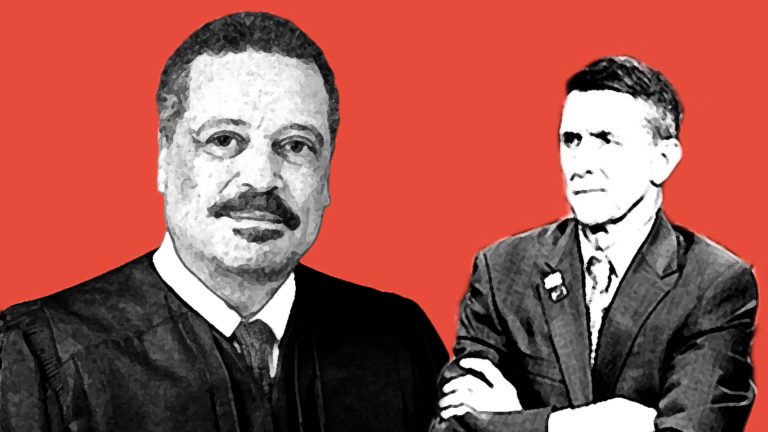
PODCAST: The Wild Michael Flynn Sentencing Hearing
LINKS
https://prodroughlyexp.wpengine.com/2018/12/read-mueller-court-documents-detailing-fbis-interview-of-michael-flynn/
READ: Mueller Court Documents Detailing FBI’s Interview of Michael Flynn

According to Mueller’s reply and supporting documents, Mr. McCabe brought up the need to conduct an interview after Mr. Flynn called him on an unrelated topic. Mr. Flynn asked Mr. McCabe if the interview would concern his interactions with U.S. Ambassador to Russia Sergei Kislyak, he said it would. Nevertheless he gave false statements to the investigators even after being confronted with his own words.“Nothing about the way the interview was arranged or conducted caused the defendant to make false statements to the FBI… The defendant chose to make false statements about his communications with the Russian ambassador weeks before the FBI interview, when he lied about that topic to the media, the incoming Vice President, and other members of the Presidential Transition Team.”
In notes following the interview, Mr. McCabe said that he told Flynn he wanted to clear the matter up as quickly and discreetly as possible. Mr. Flynn agreed and offered to do an interview that day. Mr. McCabe said that if Mr. Flynn felt he needed counsel present, he’d need to involve the Department of Justice. The quickest way to “get this done” was to just meet directly with the agents. Mr. Flynn agreed. He said he didn’t need a lawyer present and told Mr. McCabe to go ahead and send the agents over. Not having an attorney present does not, Mueller argued, absolve him of his responsibility to be truthful.During the interview, the FBI agents gave the defendant multiple opportunities to correct his false statements by revisiting key questions. When the defendant said he did not remember something they knew he said, they used the exact words the defendant had used in order to prompt a truthful response.But the defendant never corrected his false statements.
Nevertheless, Mueller concluded, Flynn’s cooperation and military service justifies a sentence of little or no jail time.The defendant agreed to meet with the FBI agents, without counsel, and answer their questions. His obligation to provide truthful information came with that agreement; it did not turn on the presence of counsel… A sitting National Security Advisor, former head of an intelligence agency, retired Lieutenant General, and 33-year veteran of the armed forces knows he should not lie to federal agents. He does not need to be warned it is a crime to lie to federal agents to know the importance of telling them the truth. The defendant undoubtedly was aware, in light of his “many years” working with the FBI, that lying to the FBI carries serious consequences.
Here are the documents in their entirety.While the circumstances of the interview do not present mitigating considerations, assuming the defendant continues to accept responsibility for his actions, his cooperation and military service continue to justify a sentence at the low end of the guideline range.
Mueller Reply to Flynn Sent… by on Scribd
McCabe Memo re: Flynn Inter… by on Scribd
Michael Flynn FBI Interview… by on Scribd
Mueller’s Filings in the Cohen and Flynn Cases Hint at ‘Collusion’

Possible Collusion in 2015?
Cohen told the Special Prosecutor’s office in one of his seven debriefings that “in or around November 2015” the President’s self-described fixer spoke with a Russian, who claimed to be trusted by Vladimir Putin, and said he “could offer the campaign ‘political synergy’ and ‘synergy on a government level.’” Take a deep breath. Think about that hand grenade that Mueller dropped into the President’s lap. Someone close to Putin offered to have the Russian government assist the Trump campaign a year before the election. Mueller also said this unnamed Russian offered to set up a face-to-face meeting between Trump and Putin. The Russian said the proposed meeting “could have a ‘phenomenal’ impact” on the election. The proposed meeting never happened. But the Special Counsel significantly does not say whether Cohen or anyone else in the campaign followed up on the offer by Russia to provide “political synergy” with the nascent campaign.What Else Cohen Told Mueller
Buried within the Cohen sentencing memo is the revelation that he told Mueller “about attempts by other Russian nationals to reach the campaign.” We know about the Trump Tower meeting. Were there more Russians who tried to speak with the Trump campaign or its officials? Cohen provided information “about his conduct and that of others on core topics under investigation” by the Special Counsel. Starting in August of this year Cohen held seven “lengthy” meetings with Mueller in which he spoke about “his own contacts with Russian interests during the campaign and discussions with others.” Do the “others” include President Trump, who was identified in court filings as “Individual 1”? Mueller didn’t say. It might. Mueller says Cohen told his office facts about “Russian-related matters” that Cohen obtained during “his regular contact” with unnamed Trump organization “executives” during the 2016 campaign.” Until shortly after he was sworn in the President was head of the real estate empire that bears his name In an almost off-handed way, Muller says Cohen talked about “his contacts with persons connected to the White House during the 2017-2018 time period.” Mueller doesn’t reveal the names of those persons, but the President obviously is someone “connected to the White House.” https://prodroughlyexp.wpengine.com/2018/11/what-to-make-of-michael-cohens-newest-guilty-plea/It’s Strictly Business
The press has long speculated that Trump’s largest potential legal liability stems not from the campaign’s contacts with Russians but from his business dealings. Cohen provides a direct nexus between the Trump real estate business and possible Russian collusion. Mueller, based on Cohen’s information, says there was a direct connection between contacts the campaign had with Russia and a planned Trump Tower in Moscow. Cohen admitted he lied to Congress about when the Moscow project died. He testified it ended before the Iowa caucuses. Cohen in fact continued to “discuss it with Individual 1 well into the campaign.” Those chats with Trump directly related to Mueller’s probe because they “occurred at a time of sustained efforts by the Russian government to interfere with the U.S. presidential election.” That’s link number one. Link Number two may be equally if not more damaging. Mueller said the Moscow Project could have reaped millions for the Trump Organization and thus “was a lucrative business opportunity that sought, and likely required, the assistance of the Russian government.” The unnamed Russian close to Putin offered that assistance when he spoke with Cohen in November 2015. He suggested that a meeting between the now-President and Putin that would help move the project along. Cohen says he spoke with Trump before he reached out to the Russian government to set up the meeting. That implies the President approved it. The meeting never happened because, as Mueller put it, Cohen “was working on the Moscow Project with a different individual who Cohen understood to have his own connections to the Russian government.” That describes Felix Sater. The House Intelligence Committee called Sater someone with “a unique and colorful background.” Sater told the panel about “his path from Wall Street banker to white-collar criminal to government informant.” https://prodroughlyexp.wpengine.com/2017/07/muller-investigating-trumps-business-ties/What Michael Flynn Told Mueller
The Mueller sentencing memo in the Michael Flynn case isn’t particularly enlightening. The same cannot be said for the Attachment to that memo or the one filed by Flynn’s attorney. Mueller, in the attachment, hints that the “links or coordination” between Russia and the Trump campaign after the election. He says Flynn has helped on a probe of “interactions between individuals in the Presidential Transition Team and Russia,” among other topics. The portion of the attachment that describes “useful information” about those contacts was redacted, indicating that it is an ongoing and sensitive investigation. https://prodroughlyexp.wpengine.com/2018/12/what-to-make-of-michael-flynns-sentencing-memo/ Both Mueller and Flynn’s attorney say the former National Security Advisor has had 19 debriefings with Mueller’s office and the Department of Justice, which took up nearly 63 hours. His lawyers say Flynn “has produced thousands of documents” to DOJ and turned over his “electronic devices.” Flynn, who served as senior advisor to the Trump campaign and then as a senior White House official gave Mueller a treasure trove of documents and presumably every email or text message he had. The noise you hear is every campaign or White House official who communicated with Flynn speed dialing criminal defense lawyers.The noise you hear is every campaign or White House official who communicated with Flynn speed dialing criminal defense lawyers.Only a stupid or reckless prosecutor would make false or misleading representations in court filings. Mueller is neither. He has a reputation for being very smart and thorough. He likely has evidence to substantiate every word in the sentencing memos. If even half the revelations are true, President Trump may be in very serious political or possibly legal trouble. https://prodroughlyexp.wpengine.com/2017/12/can-president-obstruct-justice-might-not-matter/
The Election Fraud Allegations in North Carolina’s 9th Congressional District Explained
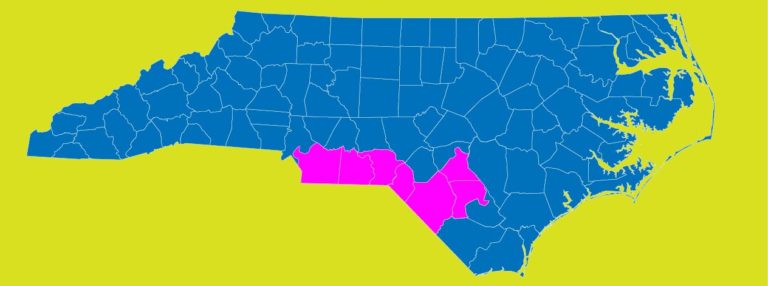
- A contractor hired by Mr. Harris’ campaign consultant collected mail-in absentee ballots from voters promising to turn them in on their behalf. It is illegal for third parties to handle absentee ballots.
- Mail-in absentee ballots were collected unsealed and could have been altered.
- Unusually high numbers of unreturned absentee ballots suggest the possibility that ballots were collected and not returned.
- Early voting results were tabulated in Bladen County before Election Day and potentially viewed by unauthorized people.
Improper Early Vote Tabulation
Tuesday, North Carolina GOP officials said if early voting totals were leaked, which state Republican Party Executive Director Dallas Woodhouse says appears to be the case, that alone would be sufficient to justify a special election.BREAKING: NCGOP Executive Director Dallas Woodhouse calls for a new #NC09 election and primary, if early voting totals were leaked by elections officials. He says they are pretty certain that happened #ncpol @wsoctv pic.twitter.com/koQA3eicsz
— Joe Bruno (@JoeBrunoWSOC9) December 11, 2018

‘Ballot Harvesting’

 Rather than a straightforward absentee voter drive, Mr. Dowless is accused of running an illegal ballot harvesting operation. Ballot harvesting is an election fraud scheme in which canvassers collect absentee-by-mail ballots from voters promising to return them on on their behalf. The ballots are then altered to favor a particular candidate or discarded when they contain votes against that candidate. There’s mounting evidence that something very much like this may have been afoot in the Ninth Congressional District, especially in the district’s Republican-heavy enclaves of Bladen and Robeson Counties. While the allegations now focus on Republicans, especially in Bladen County, allegations of election shenanigans involving absentee ballots have been going back and forth for years. The Bladen County Improvement PAC, a Democrat-aligned group, among others, has also been accused of shadiness surrounding absentee ballots in the past.
Hints in the Data
When Dr. Michael Bitzer, a political science professor at Catawba College started coming through the absentee voting data, he found some big hints that something was amiss. Nearly a quarter of the requested absentee ballots in the Ninth Congressional District were never returned, far higher than any other Congressional district in the state.

‘Stacks’ of Ballots
Other voters have also reported turning over absentee ballots to people who knocked on their door. According to Joe Bruno, a reporter for Charlotte TV station WSOC, many of these canvassers, including the one that visited Ms. Montgomery, fit the description of people who worked for Mr. Dowless.
Not the First Time
North Carolina Republicans say they have been sounding the alarm about election fraud for years and are dismayed that it is only getting attention now that it may have affected a Democratic Candidate. “It’s certainly frustrating,” Jeff Hauser, spokesman for the North Carolina Republican Party told Roughly Explained. Mr. Hauser says that there were indications of similar shenanigans in Bladen County two years ago. But then it was Republicans alleging absentee ballot fraud by a PAC aligned with the Democratic Party. “In 2016, the Bladen County Improvement Association PAC was allegedly running an absentee ballot mill in the area and harvesting ballots,” Mr. Hauser said. In an interesting twist, the person who brought the 2016 complaint was none other than Leslie McCrae Dowless. In it, Mr. Dowless alleged that workers for the PAC entered fraudulent write-in votes against him in the County Conservation Supervisor race (which he nevertheless won.) There were also instances of voters who said they had requested absentee ballots they never received and were barred from voting as a result. Ultimately, the State Board of Elections voted 3-2 to dismiss Mr. Dowless’ complaint after concluding that there were not enough disputed votes to have mattered. Given Mr. Harris’ slim lead and the scale of the alleged problems, this time around, there’s a very good chance that enough votes may be in question to sway the outcome. A New Election is Very Possible Under North Carolina state law, the State Board can order new elections if irregularities affected a sufficient number of voters to change the outcome of the election or “taint the results of the entire election and cast doubt on its fairness.” Mr. Hauser told us last week that the state Republican party would support a new election if the evidence warrants it. This week, as evidence of the problems in NC-09 mounts, Republican officials have been leaning into that position. The reality is that the State Board of Election has broad authority to order a new election. It seems increasingly likely that they will use it. Even if Mr. Harris clears the state board of elections hurdle, there is no guarantee that Democratic leaders in Washington will seat him when they take over Congress in January. For Mr. Harris, the road to Washington is set to be a lot steeper than he planned.Everything You Wanted to Know About the Bush 41 Locomotive

EDITOR’S NOTE: The Bush 41 locomotive, gleaming in its Air Force One style blue and white color scheme, has sparked a lot of curiosity. We asked Dan Gurley, who spends his days toiling in politics and his spare time watching trains, to explain.


Special thanks to David Hawkins and Kevin Cavanaugh for generously providing permission to use their photos of UP4141. You can view more photos from them on Flickr by clicking on their name.
PODCAST: Trump and the Economy Part II (with Jim Rickards)

SHOW NOTES

Trump and the Economy Part II (with Jim Rickards)
We continue our discussion of Trump and the economy with New York Times bestselling author Jim Rickards, who makes the case that Trump is on the right track with trade. But first, Taylor and Tyler break down the week’s news: the legacy of George HW Bush, the Democrats’ contentious leadership fight, and what to make of the latest turn of events in Special Counsel Robert Mueller’s Russia probe, Michael Flynn’s sentencing memo.About Jim Rickards
James Rickards is the Editor of Strategic Intelligence, a financial newsletter, and Director of The James Rickards Project, an inquiry into the complex dynamics of geopolitics + global capital. He is the author of three New York Times best sellers, The Road to Ruin (2016), The Death of Money (2014), and Currency Wars (2011), and the national best seller, The New Case for Gold (2016), all from Penguin Random House.LINKS
Jim Rickards Bio Jim Rickards Latest Book, The Road to Ruin

Follow on Twitter
Jim Rickards: @JamesGRickards Taylor Griffin: @tgriffinnc Tyler Cralle: @tylercralle RoughlyExplained: @roughlyexplain https://prodroughlyexp.wpengine.com/2018/12/what-to-make-of-michael-flynns-sentencing-memo/What to Make of Michael Flynn’s Sentencing Memo

Flynn Provided Valuable Information to Prosecutors
First and most obviously, the document indicates prosecutors are pleased with whatever Mr. Flynn has told them. They argue that he was prompt and forthright in acknowledging his offense and that he’s been telling the truth ever since. The term used here to describe Mr. Flynn’s assistance, “substantial cooperation,” is a term of art with specific meaning in the context of sentencing guidelines. Substantial assistance permits a judge to depart from the minimum sentence for an offense. According to the Federal Sentencing Commission’s formal policy guidance, which the sentencing memo cites: “Upon motion of the government stating that the defendant has provided substantial assistance in the investigation or prosecution of another person who has committed an offense, the court may depart from the guidelines.” (U.S. Sentencing Commission Guidelines, Section 5K1.1, 2018) The sentencing guidelines prescribe incarceration of 0-6 months in the case of the violation of lying to investigators to which Mr. Flynn has pled guilty, so a downward departure is unnecessary in this case. But, the use of the term “substantial assistance” is intended to underscore the value of his assistance and justify prosecutors’ request that the judge consider giving Mr. Flynn no prison time. Second, Mr. Flynn has provided information on the offenses of other individuals under investigation. We can infer this based on the requirement in the sentencing guidance mentioned above that the “defendant has provided substantial assistance in the investigation or prosecution of another person who has committed an offense.” Third, Mr. Flynn has provided information relevant to at least three matters under investigation: 1) an unknown criminal matter presumably being investigated by other federal authorities; 2) The Special Counsel’s investigation into any links or coordination between the Trump campaign and Russia; and, 3) another matter that has been redacted in its entirety. Fourth, Mr. Flynn provided information specifically pertinent to interactions between Trump campaign officials and Russia. The details of exactly how Mr. Flynn assisted prosecutors are frustratingly hidden under redactions. They are available to the judge, but because they pertain to ongoing investigations they must be redacted in the version provided to the public. But, it’s still possible to work a few things out from the addendum to the sentencing memo. We know that Mr. Flynn specifically provided assistance on interactions between Trump officials and Russia during the transition. In the unredacted portions, prosecutors are mostly referring to Mr. Flynn’s own actions here. Since the investigation of Mr. Flynn’s conduct has concluded, there’s no need to redact them. Redacted portions indicate that he may have provided information on actions of others during the transition as well. The rest of Mr. Flynn’s assistance in regards to interaction between the Trump campaign and Russia are redacted. However, from the use of a comma before a redacted portion we can infer that there are at least two more areas in which Mr. Flynn assisted in this area since a comma would only be necessary in a list of three or more items.We Don’t Know Much About What Flynn Told Prosecutors
Fifth, there is no new evidence that Trump campaign officials conspired with Russia. However, this should not be taken as confirmation that no such evidence exists or that it does. We just don’t know. Prosecutors typically hold their cards close in ongoing investigations for good reason. We don’t know what Mr. Flynn has told prosecutors. But importantly, neither do other witnesses. Other witnesses have to assume that Mr. Flynn has already told prosecutors everything. By highlighting Mr. Flynn’s cooperation, Mr. Mueller is signaling to other witnesses that it would be a mistake to lie. As they have with other documents that have emerged from Mr. Mueller’s shop, Mr. Trump’s defenders have predictably seized on the absence of smoking gun evidence of so-called “collusion” to further their claim that Mr. Mueller’s probe is an unjustified partisan witch hunt. This conclusion is rooted in a fundamental misread of Mr. Mueller’s aims. Mr. Trump’s defenders assume that Mr. Mueller is primarily motivated by a partisan desire to undermine Mr. Trump’s presidency by tarnishing it with the stink of “collusion.” So, if Mr. Mueller had discovered any indication that there was active coordination between the Trump campaign and Russia, they surmise that he would include it in his filings. It follows, in their reckoning, that because Mueller has yet to publicly provide evidence suggesting “collusion,” none exists. This argument is premised on a fundamental misunderstanding of how investigations operate generally, and of Mr. Mueller specifically. The special counsel investigation is focused first and foremost on uncovering what, if any, coordination there was between the Trump Campaign and the Russian government and, if such coordination existed, holding those responsible for it accountable. Second, it is focused on answering the question of whether Mr. Trump or any of his aides obstructed justice in an attempt to thwart investigation into these matters. Investigators have good reasons not to reveal what they know about the core matters under investigation prematurely. Because the details of what they already knows are under wraps, when witnesses offer information that corroborates it, they can be more confident that the witness is being truthful. It also makes it easier to confirm that the account of events as they understand it is correct and not just the product of witnesses repeating what they believe investigators already know. Conversely, when witnesses offer contradictory information, it indicates that one of the witnesses is wrong and that perhaps their understanding of events is potentially incorrect. If investigators put out information in real time, it makes it harder to ascertain the reliability of witnesses and ultimately, to confidently determine the facts. It’s important to stipulate that we don’t know that Mr. Mueller has any conclusive evidence of anyone in Mr. Trump’s orbit conspiring with the Russians. This may be because none exists. But, it’s also possible that Mr. Mueller knows more than he has revealed to date.The Bottom Line
Mr. Flynn’s sentencing memo does not provide much new in terms of our understanding of what exactly happened between the Trump campaign and Russia — it’s still possible that the answer is nothing. Nor does it tell us much more about whether anyone abused their power in an effort to impede the investigation. But, it does strongly suggests that Mr. Flynn has provided valuable information that may implicate others. It is all but certain that there are more shoes yet to drop.READ MORE:
https://prodroughlyexp.wpengine.com/2018/11/trump-answered-muellers-questions-is-the-russia-probe-winding-up/READ: Michael Flynn’s Sentencing Memo

Michael Flynn Sentencing Memo and Addendum by Taylor Griffin on Scribd
What to Make of Michael Cohen’s Latest Guilty Plea
